Loading...

Data centres, electrification and rising power demand are already reshaping the needs and projects of network infrastructure. As Main Partner of Verkosto 2027, Tampereen Vera Oy sees major opportunities ahead for the sector – while stressing the importance of hands-on expertise, collaboration and sufficient resources.
Verkosto is already a familiar event for Tampereen Vera from previous years. In 2027, the company will participate for the first time as Main Partner. Tero Hongell, Business Director of Project Services, sees one of the event’s main strengths in its ability to bring together a broad range of industry professionals from Finland and beyond.
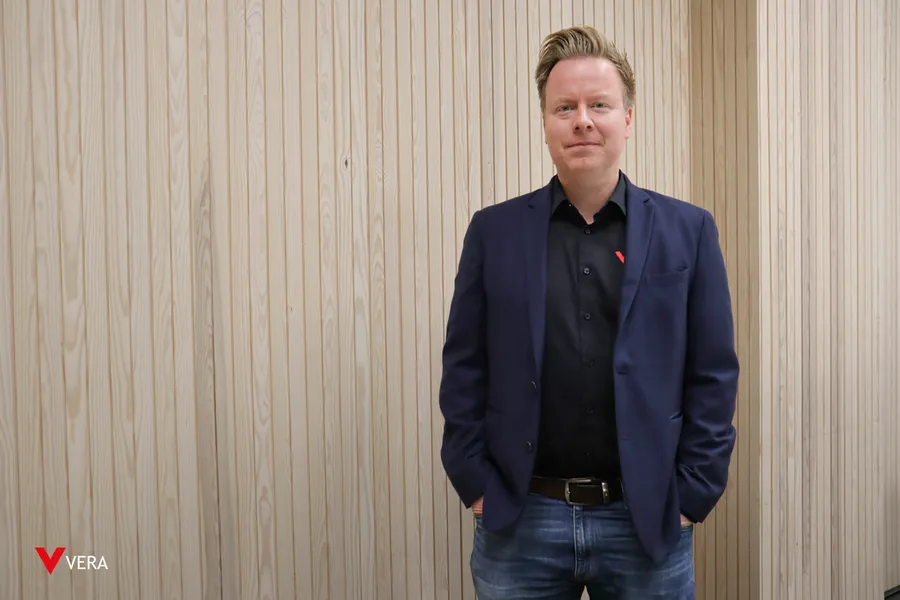
“Verkosto always creates a lot of valuable encounters. We discuss future needs and projects with customers and partners, and in previous years the event has also led to agreements on upcoming work. For us, Verkosto is a very productive place to move things forward,” Hongell says.
From local maintenance to nationwide projects
Tampereen Vera Oy designs, builds and maintains critical electricity and energy infrastructure. The company delivers power networks, substations, outdoor lighting, traffic management solutions and renewable energy solutions throughout Finland.
In Tampere, Vera is particularly known for maintaining electricity networks, traffic lights and lighting, while its project operations extend nationwide. Depending on the project, the company can act as the main contractor and principal contractor or deliver a defined part of a larger project.
“It is important to us that both our office teams and people in the field have the expertise and experience required for the job. We want to be known for high-quality work. Our capabilities really come into their own in demanding environments – the more challenging the site, the more interesting it is for us,” Hongell says.
Data centres are driving demand for network infrastructure
Growing electricity transmission needs are already visible in Vera’s business through requests for tenders related to cabling, substation construction and refurbishment. According to Hongell, projects are now being planned several years ahead.
Data centres are one of the most visible drivers of this development. Their construction affects transmission and main grids, substations, as well as demand for materials and contracting capacity. At the same time, large-scale projects create opportunities for different types of contractors and new forms of collaboration.
“Data centre projects require a wide range of expertise. Large companies may be responsible for extensive electrical contracts, while smaller operators can deliver specific parts of the overall project. We have also bid for these kinds of packages together with partners. A well-functioning supply chain becomes even more important in projects of this scale.”
Future networks need flexibility – and skilled people
When looking at the development of network infrastructure, Hongell highlights flexibility solutions such as energy storage and load management. Joint construction is also becoming more common as different organisations increasingly deliver projects together.
Another key question is how to ensure continuity of skills. Much of the practical work involved in electricity networks is learned on site, making the opportunity to work alongside experienced professionals especially important.
“The future power grid cannot be built remotely. It must be built on site. That means we will continue to need skilled people and sufficient resources in the years ahead. Now is a good time to invest in training new professionals and to show how meaningful work in electrical infrastructure really is. We are building the infrastructure that keeps society running,” Hongell says.
Skills, upcoming projects and the collaboration needed to deliver them are among the themes Hongell hopes will be discussed at Verkosto.
Learn more about Tampereen Vera: tampereenvera.fi